Home

Build a Dropbear

You print it.
You wire it.
You teach it.

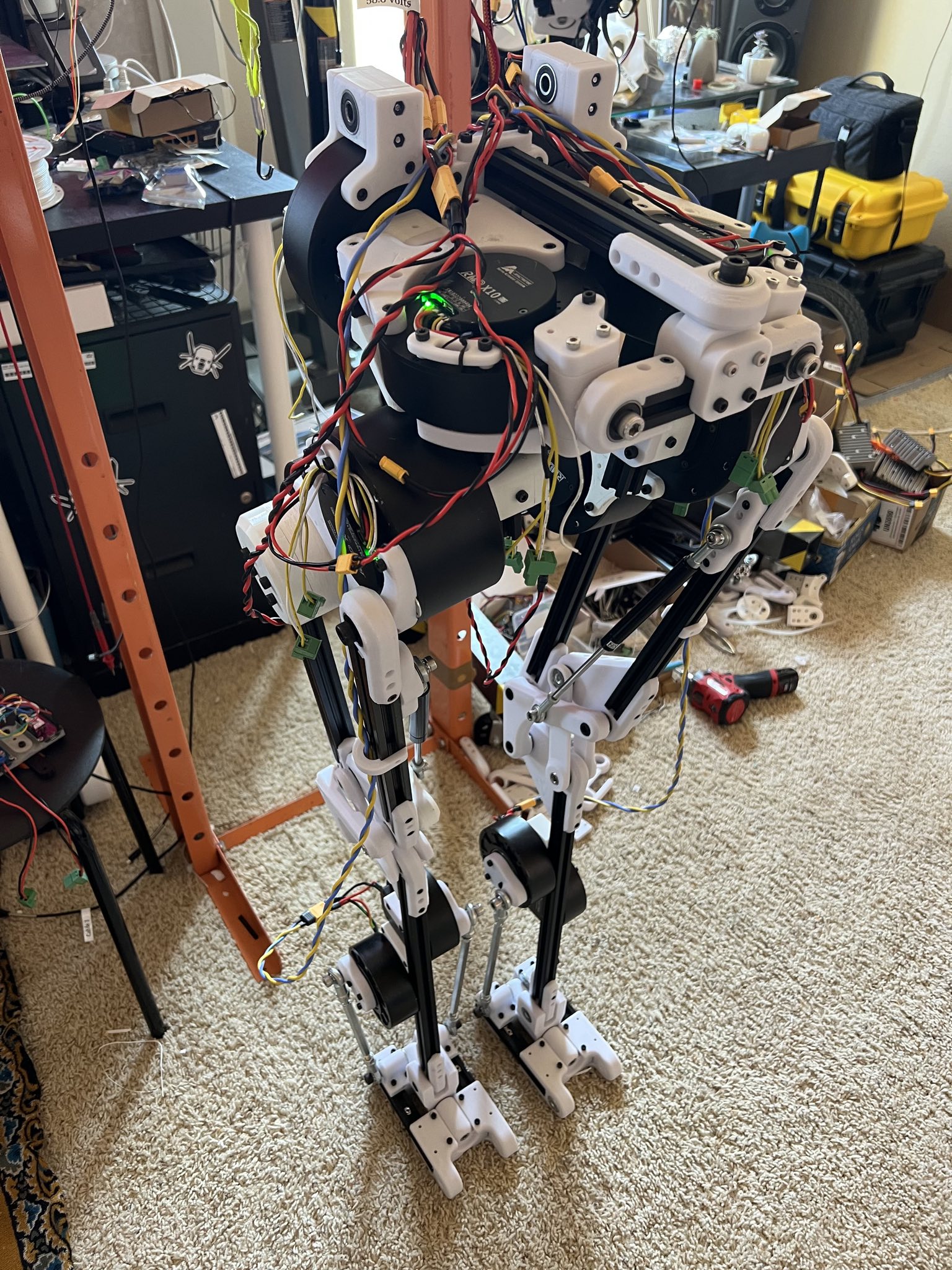
The DIY path to a Dropbear humanoid. ~$1.5k3k in parts, 8–12 weekends, fully open BOM and printables. Two agents do the heavy lifting on parts and plates so you can focus on assembly.

Parts cost

$1.5–3k

open BOM

Time

8–12 weekends

~38h across 10 sessions

Printables

352+

fits on a 256mm bed

BOM lines

126

canonical, traceable

How it works

Two agents do the procurement. You do the assembly.

01 · Sourcing agent

Buys every part it can

Reads the canonical BOM, watches your inventory, and runs continuously in two modes:

  • Online runs. Browses real vendor sites — McMaster, Amazon, AliExpress, Misumi. Builds carts, you watch each step before paying.
  • Local runs. Knows your region, plans a driving route to the parts you can pick up that weekend.

The goal is a single thing: every line on the BOM transitions from needed ordered in hand.

02 · Printing agent

Runs your bed

Pushes plates straight to your Bambu over LAN. Groups parts by color, so you print all-black-panels.3mf, accent-amber.3mf — not part-by-part guesswork.

  • Picks the next plate based on which session you're on and which parts are blocking it.
  • Watches progress live. Pause, retry, reslice without leaving the dashboard.

352 printables organized by region. Goal: every plate done before its session.

Both agents are watched, never autonomous in the spending sense. You approve every cart and every plate. The agents do the boring research, the cart-building, the slicer round-trips — and stop when a human decision is needed.

The journey

10 sessions. 59+ steps. Each session ends in a mechanical artifact — a torso that holds itself up, a leg that bears load. Every step has CAD highlights, parts manifest, exit verification.

  1. 01
    Torso Assembly
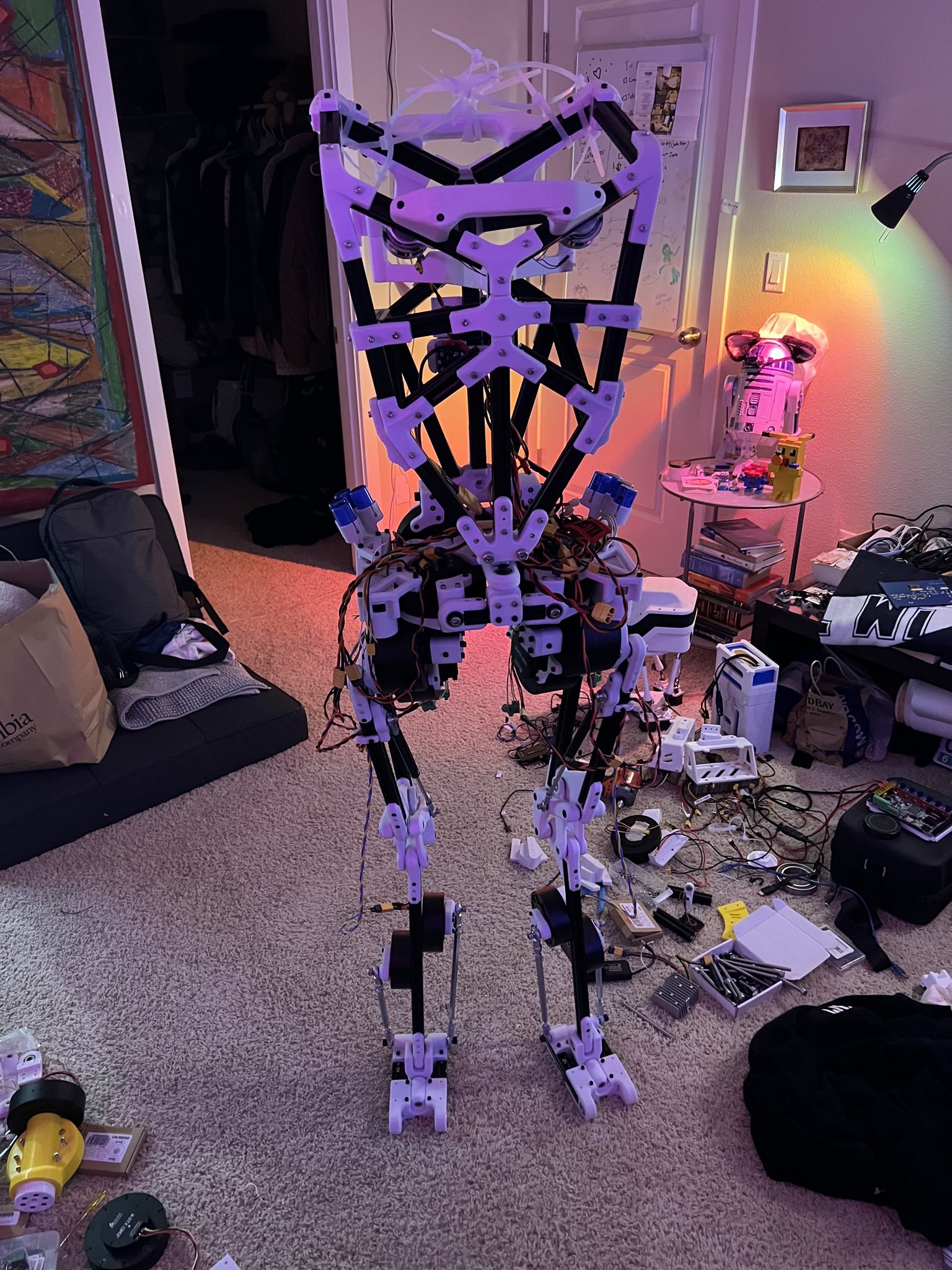
    A futuristic, rigid robot torso — square, light, holds its shape under hand-twist. The first part of your Dropbear that exists in the real world.
    torso2h
  2. 02
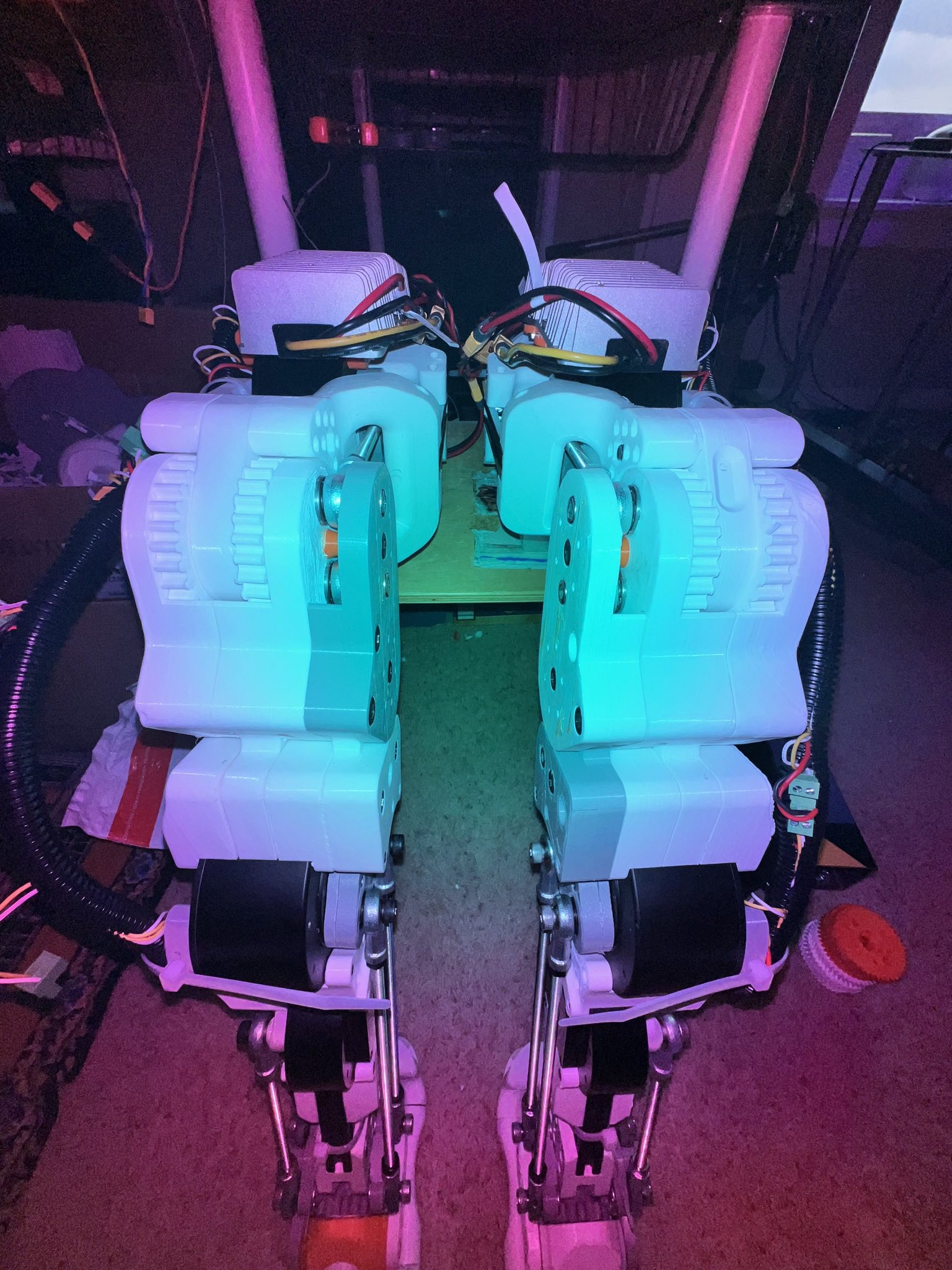
    Pelvis & Hip Assembly
    The pelvis subassembly — the load-bearing bridge between torso and legs, with hip pitch/yaw/roll mounts ready for actuators.
    pelvis2h
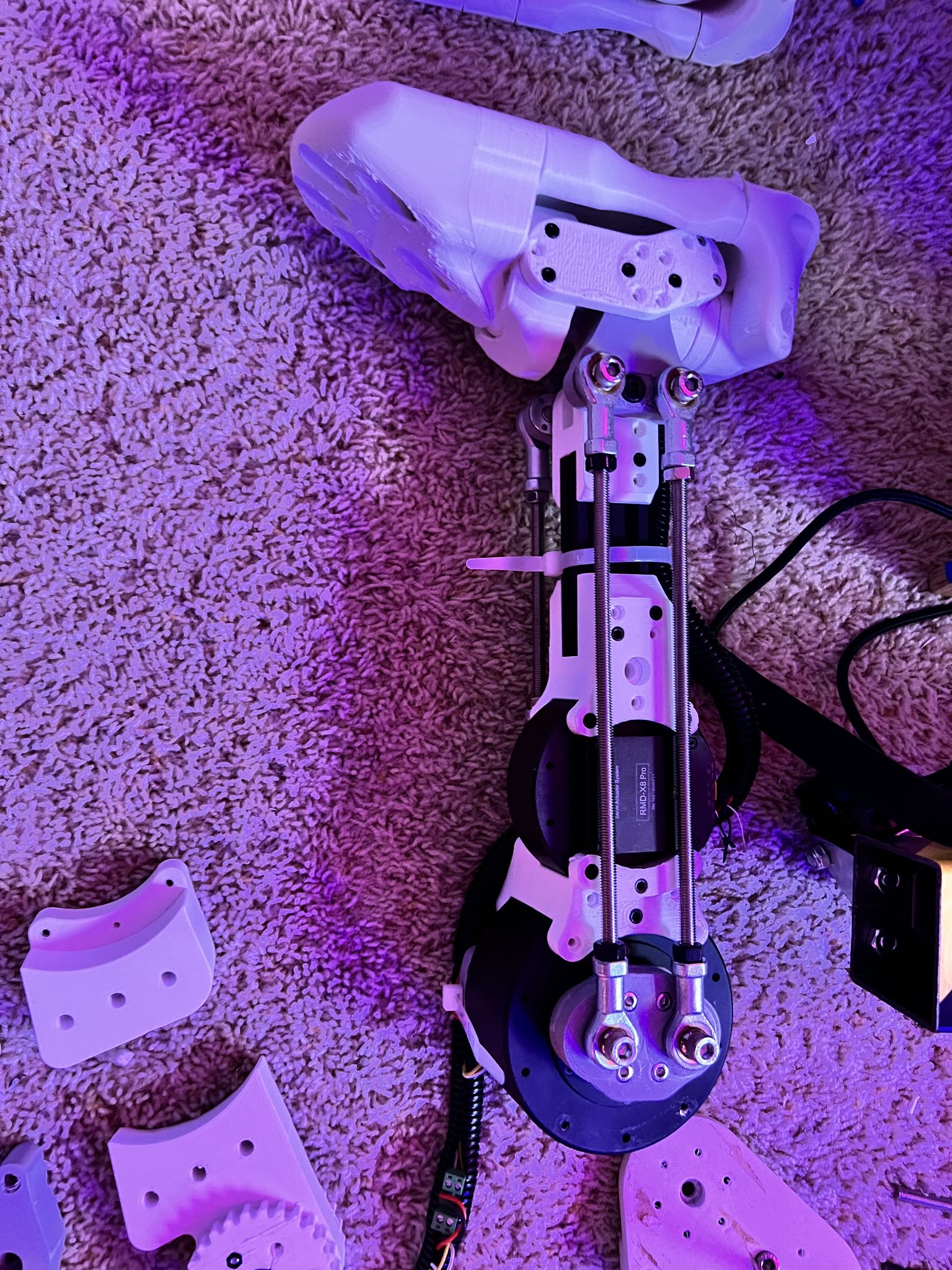
  3. 03
    Left Leg Assembly
    The left leg from hip to ankle — femur, tibia, knee revolute, ankle pitch/roll. Articulates freely once actuators are mounted.
    l-leg3h
  4. 04
    Right Leg Assembly
    The right leg — mirror of the left. Same instructions, mirrored parts. About 30% faster the second time.
    r-leg3h
  5. 05
    Left Foot
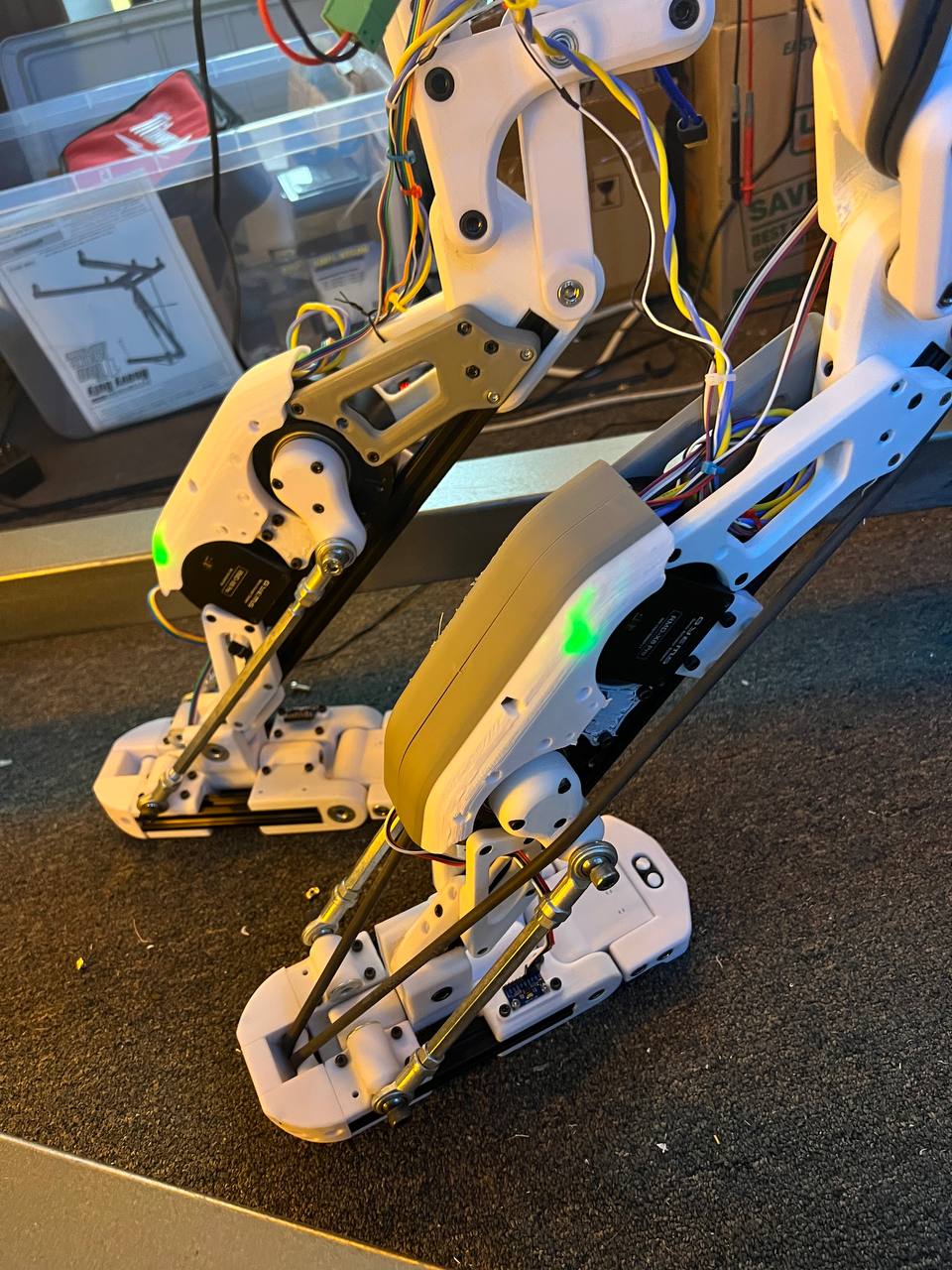
    The left foot — a smart sensing platform with four 50kg load cells embedded in TPU pads. Dropbear feels the ground through this.
    l-foot2h
  6. 06
    Right Foot
    The right foot — mirror of the left. Same sensing platform, same process.
    r-foot2h
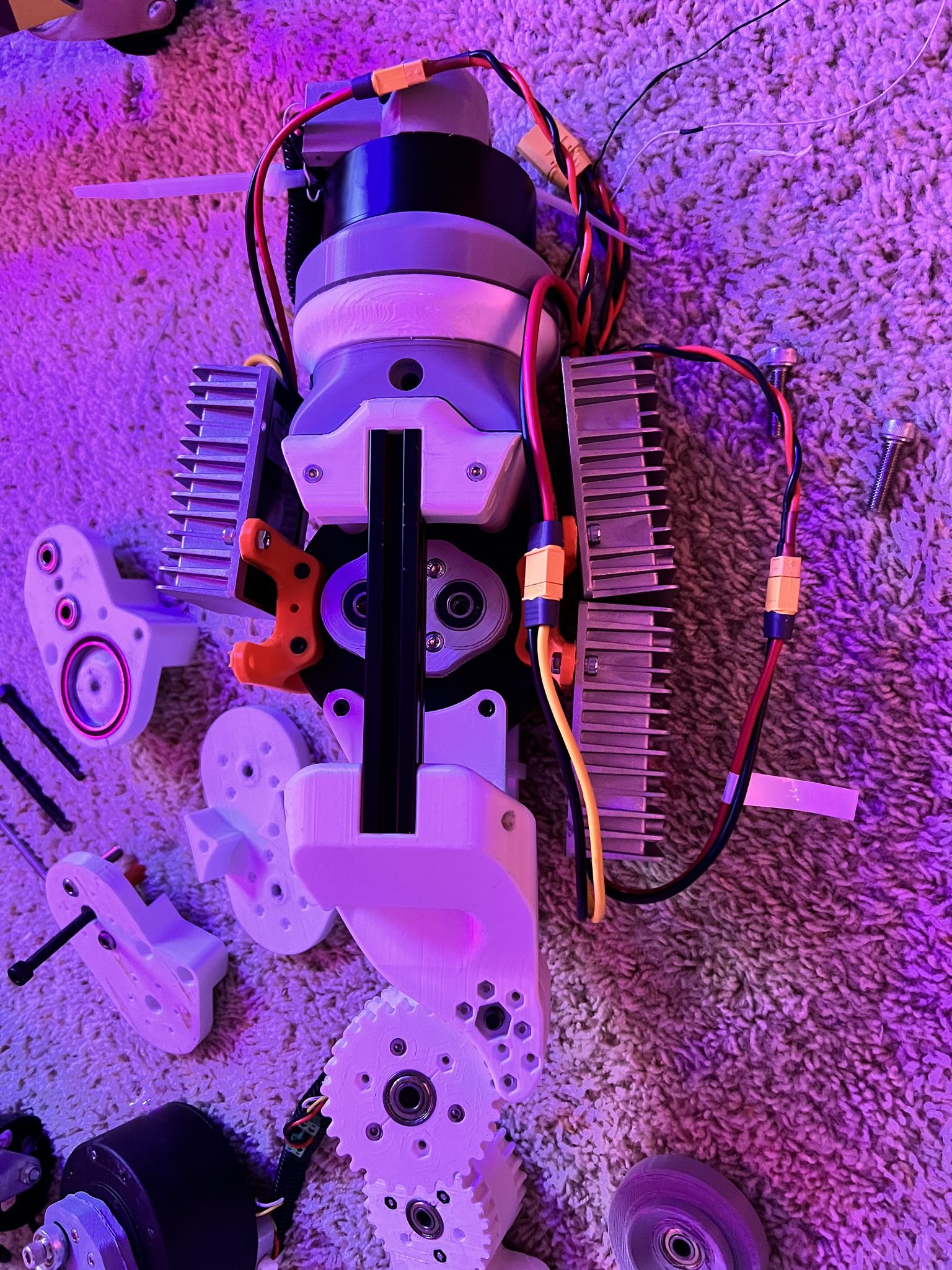
  7. 07
    Left Arm & Hand
    The left upper limb — shoulder yaw/pitch/roll, elbow, wrist, and the Aero Hand with five tendon-driven fingers at 7 DoF, 16 joints, 389 g.
    l-hand5h
  8. 08
    Right Arm & Hand
    The right upper limb — mirror of the left. Same instructions, mirrored parts.
    r-hand4h
  9. 09
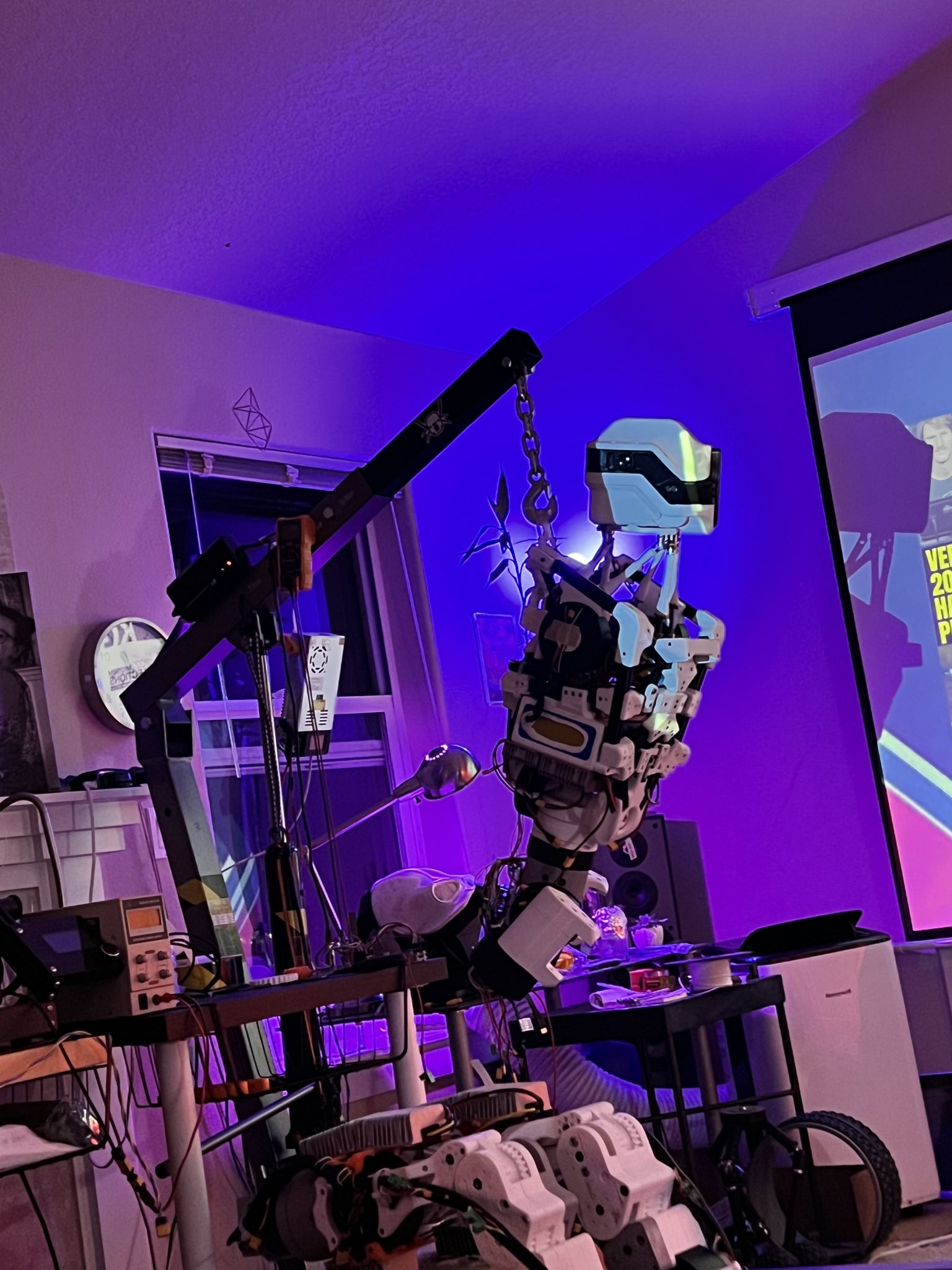
    Head — the Egg
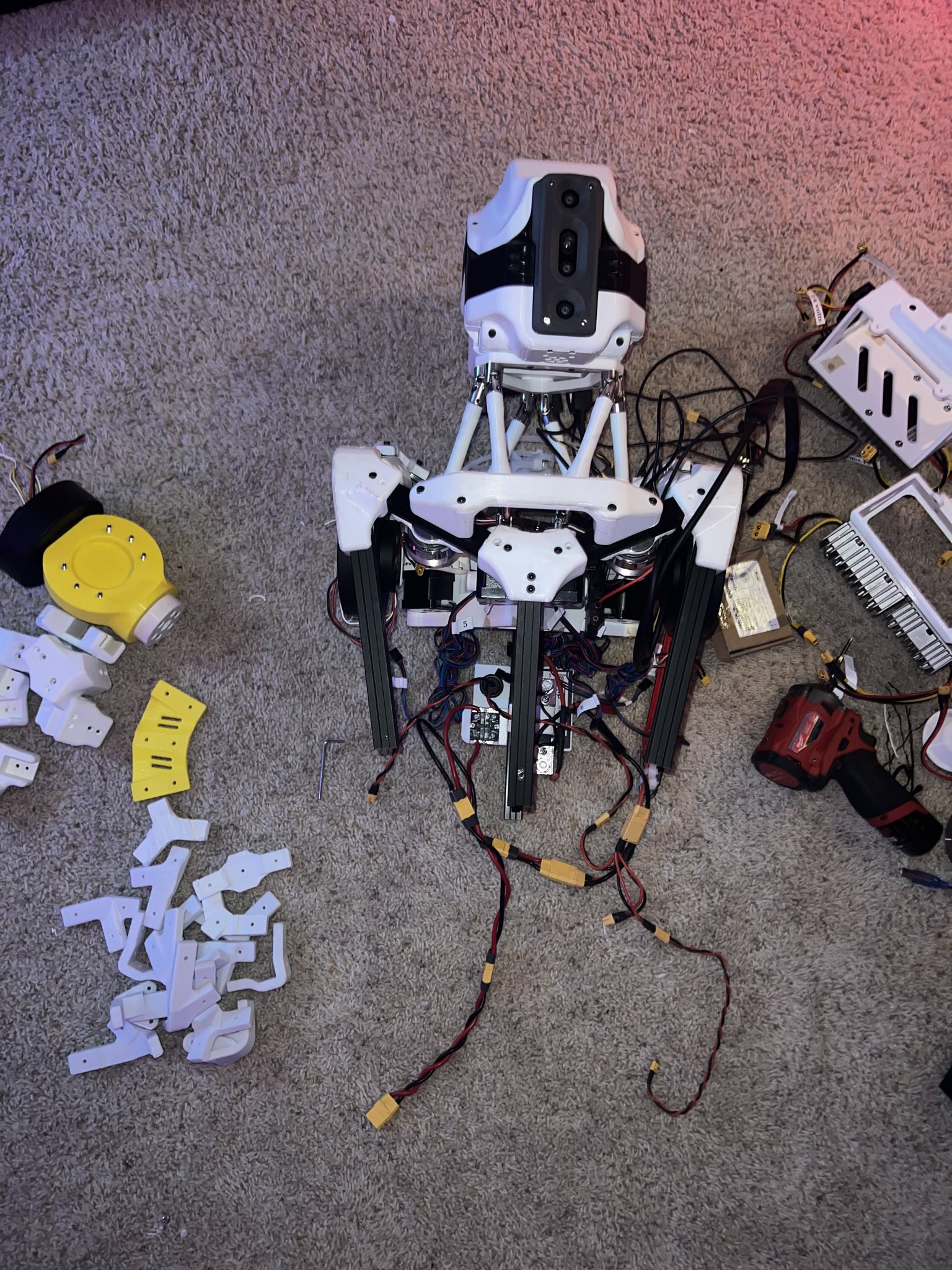
    The Dropbear head: Stewart platform with 6-DOF motion, camera, Jetson Orin running local LLM. The face that talks back.
    head8h
  10. 10
    Full Robot Integration
    All nine subassemblies joined into a standing Dropbear. First full-body power-on: every joint alive, sensors live, the robot as a system for the first time.
    full-robot8h

Buy vs build

Buy

ships 2027 · $500 deposit
$9,999+
  • ·Fully assembled, tested, calibrated
  • ·Pick configuration, color, intelligence tier
  • ·Same /connect, /control, /skills surface
Configure

Build

8–12 weekends · no commitment
$1.5–3k
  • ·You learn every layer — mechanical, electrical, software
  • ·Open BOM, open printables, open code
  • ·Sourcing + printing agents do the procurement
Start the journey

Either path lands the same place: a Dropbear that runs trained policies from the open marketplace. The platform doesn't care how it got there.

Open source, all the way down

Ready to start?

The first session is free. Onboarding generates a plan calibrated to you. Walk away any time — your progress saves locally even before sign-up.